The combination of an analytical mind and the courage to take risks creates leaders who do not simply follow trends, but shape markets responsibly and for the long term.
Successfully transitioning from scientific research to the dynamic world of entrepreneurship requires a rare combination of analytical thinking and the courage to make decisions under uncertainty. Dr Ana Ljevar, Managing Director and Owner of Humed pharma, has achieved precisely that, turning her academic background in pharmacy and human nutrition, complemented by an MBA, into her greatest business asset. Under her leadership, Humed pharma has established itself as a stable and trusted leader in the aesthetics and pharmaceutical sectors in the domestic and regional markets, representing renowned global brands and continuously raising the standards of professional education. In an open conversation with our magazine, Ana Ljevar reveals how she filters global innovations, why taking genuine responsibility is essential to team growth, and why her definition of success today is inextricably linked to the concept of freedom.
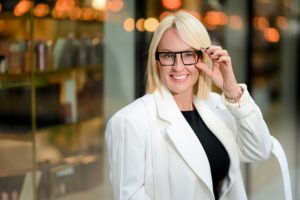
- Given your academic background and PhD, what was the transition from scientific research to the fast-paced world of entrepreneurship like? Which scientific skills have proved to be your greatest asset in business?
The transition was not as significant for me as it might seem. Science and entrepreneurship share one important characteristic – you need to know how to ask the right questions, analyse data, distinguish facts from assumptions and make decisions based on your findings. My scientific background – first in pharmacy and then through a PhD in human nutrition – gave me discipline, analytical thinking and a healthy dose of scepticism. I do not accept something simply because it sounds good or happens to be a trend. I want to understand the underlying mechanisms, the evidence and the actual value. Entrepreneurship, on the other hand, has taught me that you have to make decisions even when you do not have all the information. You need to assess the risks, make a decision and take responsibility for it. This combination of scientific precision and entrepreneurial agility is probably my greatest asset.
- How important are formal and informal education for a modern female executive who wants to stay ahead of market trends?
They are extremely important, but simply collecting qualifications is not enough. Formal education provides breadth of knowledge, a structured way of thinking and discipline. My studies in pharmacy, PhD and MBA gave me three distinct perspectives: healthcare, science and business. However, the market is changing so rapidly today that most learning takes place through everyday work: conversations with doctors, pharmacists, international partners, employees and customers; attending conferences; keeping up with new technologies; and, perhaps most importantly, learning from our own mistakes. For me, education is not a life stage that ends with a degree. If you run a company, you have to keep learning continuously. The moment you think you know enough, the market has very likely already overtaken you.
- Humed Pharma has established itself as a recognised partner in the aesthetics and pharmaceutical sectors. Which key strategic decisions and values have positioned the company as a stable and trusted leader in the domestic and regional markets?
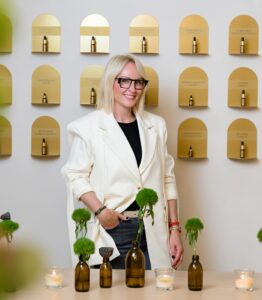
One of our most important decisions was to build Humed Pharma not around a large number of products, but around carefully selected brands that we can confidently stand behind with our professional expertise. Today, our portfolio includes IBSA, with Profhilo and Aliaxin; Cantabria Labs, with Heliocare, Endocare, Neoretin, Biretix and Iraltone; Skinbetter Science; TSK; Skin Tech Pharma, with its chemical peel and mesotherapy range; Tricopat, which focuses on stimulating hair growth; and Novaclinical devices for gynaecologists. We have been working with many of these partners for more than ten years, which, in our industry, is one of the strongest indicators of trust. For the Alqvimia brand, we have also opened our own Alqvimia Store & Spa in Zagreb, at 4 Augusta Cesarca Street, in a beautiful location right in the city centre. It is open to everyone who wants to experience the brand firsthand.
In our line of work, distribution is about much more than importing and selling products. In aesthetic medicine, dermatology and medical devices, you need to understand the products, educate physicians and the market, and develop the category over the long term. That is why a significant part of our work involves training and providing professional support to clinics, rather than simply selling products. Another important decision was to adopt a regional outlook. Croatia is our home market, but from the outset, we have looked beyond its borders, towards Slovenia and Bosnia and Herzegovina, where we see considerable potential for further growth. And thirdly – we are consistent. In entrepreneurship, there is a great deal of talk about vision and innovation, but too little about day-to-day execution. Reliability is built by delivering on what you promise, year after year. Our partners recognise this very quickly, which is why they choose to maintain long-term relationships with us.
- You once stated that people are the greatest challenge in business. With your vast experience, how do you balance the pursuit of ambitious business goals with building a motivated, loyal team?
I still believe that people are both the greatest asset and the greatest challenge for any company. Over time, I have learned that a good team is not one in which everyone is constantly happy. A good team is one in which people know what is expected of them, have a sense of responsibility, are given room to grow and feel that their work has meaning. I have high expectations, first and foremost of myself, and then of the people I work with. I believe people grow the most when they understand what is expected of them, when they receive honest feedback and can discuss important matters openly, even when those conversations are uncomfortable. At the same time, I believe people deserve respect, clear communication, fair working conditions and recognition when they do a good job. The most important lesson I have learned over the years is that my role is to build a team and a system that do not depend on me for every decision. When people take genuine responsibility, both they and the company grow.
- The aesthetic medicine and pharmaceutical sectors are evolving extremely rapidly. How do you identify global innovations and bring them to the local market at the right time while maintaining high standards of safety and quality?
We continuously monitor global markets, international congresses, scientific publications and the development of new technologies, but we do not try to bring every innovation we come across to the market. That would be a mistake. In aesthetic medicine, many trends become popular very quickly, but disappear just as fast. That is why, when evaluating any new technology or product, we consider several factors: whether it is supported by scientific evidence, its safety profile, who is behind the product, whether it complies with regulatory requirements, and whether it addresses a genuine need among doctors and patients. Only then do we assess its commercial potential. A distributor’s responsibility is to act as a filter between the global market and the local healthcare system, rather than merely serving as a logistics channel. Our goal is not to be first at any cost, but to identify high-quality innovations early enough and bring them to market responsibly and with the necessary expertise.
- What does success mean to you personally today? How do you balance the demanding role of company owner and managing director with your private life and time for yourself?
My definition of success has changed considerably. In the past, I associated it more with growth, results and achieving goals. Results still matter to me — I enjoy building, creating and winning — but freedom has become equally important. The freedom to choose whom I work with, which projects I take on and how I want to live. I did not gain that freedom by working less, but by building a team and processes that do not depend on my being in the office every day. For me, that is also the best indicator of a company’s maturity. As for work-life balance, I do not place much faith in its idealised version. When you are building a company, there are periods when work inevitably takes up more of your time, and others when you can slow down. I find the concept of integrating work and life more realistic than striving for perfect balance every single day. Today, I am more conscious about protecting my time, energy and privacy. Perhaps the greatest luxury that success brings is precisely the ability to set my own priorities.
- As a successful businesswoman, what would you identify as the greatest obstacle and the greatest advantage women face in leadership positions in Croatia? What is your key message to young women entrepreneurs who are just starting to build their careers?
Women today have far more opportunities than previous generations, but they still often create one obstacle for themselves: they wait until they feel completely ready. I often see outstanding women postponing a decision, an application or a new step until they are certain they meet every single criterion. That moment rarely comes. On the other hand, women have a significant advantage in their ability to bring different perspectives together and read people and situations particularly well. When these qualities are combined with competence and determination, they create a powerful combination. My advice to young women entering entrepreneurship is not to wait for anyone’s permission. You do not need to know every step before you get started. Not every project will succeed, not everyone will support you, and you will certainly make mistakes.
But confidence does not come before experience. It develops after situations in which you did not know something, made a decision anyway, solved the problem and moved forward. And there is one more thing that matters to me: another woman’s success takes nothing away from you. As women, we gain far more by opening doors for one another than by seeing each other as competitors.