While the market dictates a race to the bottom on prices, a strategic shift towards appliances built to last two decades proves that true luxury lies in sustainability and trust.
When you buy a household appliance, you do not choose it for just one season. It is precisely this understanding of long-term value that sets Miele apart in the domestic premium appliance market. At the helm of this successful operation, which now accounts for a quarter of the region’s total turnover, is Josip Marušić, Managing Director of Miele Croatia. Rather than pursuing growth at any cost, he insists on introducing the Japanese philosophy of small, continuous improvements within his team and preparing a state-of-the-art flagship centre in Zagreb. In an interview with our magazine, Marušić reveals how to earn and maintain customers’ trust in times of inflation, why sustainability must be more than a marketing gimmick, and how he is building a service network despite the chronic shortage of technical professionals in the labour market.
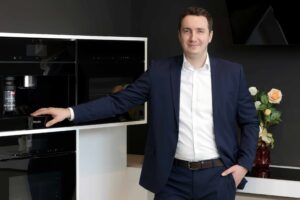
- Miele Croatia has delivered strong business results in recent years, with revenue reaching almost €17 million in 2025. What lies behind this success, and what role does Croatia play in the company’s regional and global operations?
Above all, these results are built on consistency. Miele is a brand built on long-term customer trust, and that kind of trust cannot be earned overnight. In 2025, we generated almost €17 million in total revenue, a result we can be satisfied with. Since the beginning of 2025, Croatia has been part of Miele Cluster Adria Aegean, a regional organisation in which we account for approximately 25 per cent of total cluster revenue. This clearly demonstrates the importance of our market to the company’s regional operations. Globally, Miele generated revenue of €5.16 billion in 2025. Croatia is part of that broader story, but our success is measured primarily by what we achieve here. Our goal is not growth at any cost, but a healthy business, long-term customer satisfaction and a stable market position.
- Miele is globally recognised as a premium brand. How do you communicate the value of premium appliances to customers amid inflation and rising living costs?
Price matters, and that is entirely understandable. Today, we all think more carefully about where and how we spend our money, regardless of our purchasing power. Miele is positioned in the premium segment, and it is our responsibility to clearly demonstrate to customers what underpins that positioning. It is not just about design or a particular feature, but also about the quality of materials, reliability, energy efficiency and support throughout the appliance’s lifetime. When you buy a washing machine or dishwasher, you are not buying it for just a year or two. You expect it to perform well, be energy-efficient and, should anything go wrong, to have access to appropriate servicing and spare parts. This is where the difference between the initial purchase price and long-term value really becomes apparent. Of course, we must also be mindful of purchasing power in the Croatian market. That is why we strive to offer products to suit different needs within the premium segment, while selected promotional activities help make high-quality appliances more accessible. I do not expect every customer to choose Miele. But I want those who do to still feel, many years later, that they made the right decision.
- Sustainability is one of Miele’s key priorities. How much attention do Croatian consumers pay to energy efficiency and appliance longevity? Are they willing to pay more for these benefits?
I believe consumers are paying increasing attention to energy and water consumption, although I would not say that sustainability is everyone’s top purchasing criterion. Price and functionality still play a major role. For me, sustainability begins with a very simple question: how long will an appliance continue to do its job well? During development, Miele subjects most of its household appliance series to testing designed to simulate 20 years of use. This is not a guarantee that every appliance will last that long, but it demonstrates how seriously we approach quality and reliability. Repairability is equally important, which is why Miele provides for the long-term availability of key original spare parts, for at least 15 years after production of the relevant series ends. Our commitment to sustainability has also been recognised globally. In 2026, Miele was awarded a Gold Medal in the EcoVadis sustainability assessment, placing it among the top two per cent of companies evaluated. Ultimately, however, what matters most to customers is something very tangible: an appliance that works reliably, consumes fewer resources and does not need to be replaced prematurely. I believe this is the best way to make sustainability more than just a buzzword.
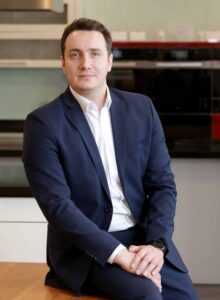
- Miele Experience Centres in Zagreb and Split offer a different experience from a traditional retail store. How important is direct, in-person interaction with the brand today, how are you developing digital channels, and are you planning to open new locations?
Physical and online sales should not be viewed as competing channels. Customers often begin their purchasing journey online, researching models and comparing features, but before making a final decision, they want to see the product in person and speak to someone who knows it well. This is particularly true of built-in kitchen appliances, where it is important to understand the customer’s needs, how they use their kitchen and the possibilities offered by the available space. At our Miele Experience Centres, customers can see the appliances, try out their features, attend culinary demonstrations and receive practical advice. Reading about what a particular oven can do is one thing; seeing it in action is quite another. Digital channels, on the other hand, allow customers to shop whenever and wherever it suits them. Our task is to ensure that the experience is equally good, regardless of the channel.
- You have announced the opening of a new flagship Miele Experience Centre in Zagreb in the first quarter of 2027. What can you tell us about the Avenue V project, and what will it mean for your customers?
We are preparing to open our most modern Miele Experience Centre in Croatia at the Avenue V location in Zagreb. We want to establish it as a new benchmark for the premium home appliance experience on the domestic market. Our aim is to create a place where customers can experience Miele in a way that best reflects what our brand stands for, from design and technology to culinary experiences, product demonstrations and personalised consultations. It is particularly important to me that this should be more than just a place to shop. It should be a source of inspiration, where customers can find ideas for their homes, see appliances in real-life use and talk to our experts. Our international teams are also involved in bringing the project to life, ensuring that the new centre meets Miele’s global standards.
- Croatia has been part of Miele Cluster Adria Aegean since 2025. What has this organisational change brought to the Croatian business, and what advantages do you see in regional integration?
The eight markets within the cluster differ considerably in size, purchasing power and consumer habits. However, the challenges they face are often very similar. That is precisely why it makes sense to share experiences, develop certain processes together and learn from one another. At the same time, I do not believe that all countries should operate in exactly the same way. What works well in Greece cannot necessarily be applied in Croatia or Slovenia. Personally, I value the fact that we now have more opportunities to exchange knowledge, compare different approaches and develop our people within the regional organisation. I believe this kind of collaboration can deliver the greatest benefits in the long run.
- Miele is a family-owned company with more than 125 years of tradition and a distinctive “Immer Besser” philosophy. How do you communicate these values to your local team, and what is your personal approach to leadership?
Personally, I try to follow the Kaizen philosophy, which is based on the idea of continuous improvement through small, everyday changes. I do not believe that progress always has to come through major projects and reorganisations. Sometimes, it is enough to simplify a process, eliminate an unnecessary task or change the way we communicate. It is also important to me that people understand the bigger picture of the business, rather than focusing solely on their own area of responsibility. Sales, marketing, service and administration are not separate worlds. Ultimately, the customer sees one Miele. One of the greatest challenges in running a business is finding time for improvements while dealing with day-to-day operational tasks. That is why I constantly try to return to a simple question: are we doing something because it is genuinely necessary, or simply because that is how we have always done it? For me, that is exactly what “Immer Besser” means: never stop learning, questioning established ways of working and looking for opportunities to improve every single day.
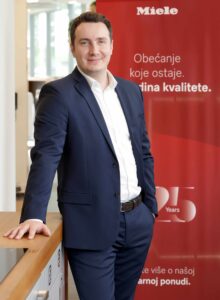
- A premium appliance also requires high-quality after-sales service. Given the shortage of technical professionals in the Croatian market, how do you maintain a high level of expertise and ensure access to service support?
Service is one of the most important aspects of our business. Customers rightly expect expertise, availability and clear communication. In Croatia, these challenges are compounded by the geographical spread of the market and the shortage of qualified technicians. That is why continuous training, technical support and the availability of spare parts are so important. Simply arranging a service visit is not enough. The goal must be to resolve the problem effectively, ideally during the first visit. Our task is to continuously improve our processes so that customers receive timely information, high-quality support and a solution to their problem.
- Artificial intelligence is increasingly making its way into the world of household appliances. Which of Miele’s innovations have particularly caught your attention, and how do you see the brand developing in Croatia through to the end of the decade?
When it comes to new technologies, there is one question I always ask: what tangible benefit will the customer actually gain? At this year’s IFA trade fair in Berlin, Miele presented several particularly interesting innovations. These included the new generation of G8 Diamond dishwashers, which use a camera and intelligent systems to detect how the appliance is loaded and adapt the washing process accordingly. The company also introduced CulinaryCoach, an AI-powered digital assistant that helps users prepare meals and select the appropriate oven settings. Another innovation is the new generation of W2/T2 laundry care appliances. These innovations are being introduced gradually across selected markets and models, so their availability in Croatia should be considered in the context of specific launch plans. What I find particularly interesting is the change in how we approach technology. In the past, we used to talk about how many new features an appliance offered. Today, what matters more is how much those features simplify our lives. As far as Croatia is concerned, we want to continue growing the business, strengthening our relationships with partners and further enhancing the customer experience, from the very first interaction through to after-sales service.