Economic ties are one of the clearest indicators of how strong our relationship has become and Energy is the central pillar of that cooperation.
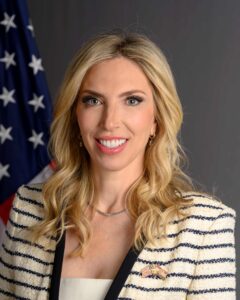
The United States and Croatia are close NATO allies, and our cooperation is reflected in our partnership in joint training and defense modernization, for Diplomacy&Commerce magazine says H.E. Nicole McGraw USA Ambassador to Croatia. In the year when the USA celebrates the 250th anniversary of America’s independence, Ambassador McGraw especially emphasizes the importance of the agreed projects at the Three Seas Initiative Summit in Dubrovnik. In the first interview for our magazine, she reveals which places in Croatia she fell in love with, and how the USA is preparing for the 2026 FIFA World Cup – North America.
1. How would you assess US- Croatian relations today, given the importance and influence of Washington in Croatia’s independence? Are there any open issues and where do you see room for improvement in cooperation?
Since Croatia’s independence, the United States has been a steadfast partner and supporter. We are proud to have been a part of helping Croatia become a capable ally that contributes meaningfully to NATO, regional stability, and Europe’s energy security. But what excites me most is the future. I see our relationship through a lens of opportunity. For the first time in Croatia’s history, they now have a “A” credit rating. This demonstrates a stable market for American investment. There is enormous potential to deepen our economic ties and expand two-way trade and investments. U.S. companies see Croatia as a promising market, especially in energy, infrastructure, and the tech sector – we want to see that potential fully realized. The Three Seas Initiative is a good example of where this partnership is heading. In Dubrovnik at the end of April, the United States government and American companies signed major deals that will further energy diversification and independence and strengthen digital infrastructure. These are clear, tangible indicators of the opportunities ahead and of this region’s rising potential to lead in the new AI era.
2. The two countries are members of NATO, within which they have military-technical cooperation. What is this cooperation specifically reflected in and what would you highlight, especially in light of the international instability we are living?
The United States and Croatia are close NATO allies, and our cooperation is reflected in our partnership in joint training and defense modernization. Croatia understands the importance of maintaining a strong and capable military to preserve peace and stability – as President Trump says, peace through strength. By signing NATO’s Hague Commitment to increase defense spending and invest in both military capabilities and critical infrastructure, Croatia is stepping up to share the responsibilities that keep Europe secure. This kind of burden-sharing is essential to the NATO alliance. Croatia continues to expand its capabilities and modernize its forces. Croatia’s acquisition of American-made Black Hawk helicopters, High Mobility Artillery Rocket Systems (HIMARS), and the recently introduced Bradley Infantry Fighting Vehicles have started a new era of collaboration and defense modernization. I am also excited about the potential I see in Croatia for increased naval cooperation even as Croatia contributes its centuries of seafaring and shipbuilding experience to the NATO Alliance. Similarly, the United States recognizes the importance of Croatia’s expansion of its naval forces. Croatia plans to add two ships to its fleet, and the United States stands ready to partner in that endeavor as well. That strength includes not only defense capabilities, but also resilience in key sectors like energy. Diversifying energy sources, including through nuclear and other reliable options, helps protect against market volatility and external pressure, which in turn strengthens overall security. This is where broader cooperation, including the Three Seas Initiative, is key. Investments in energy, transport, and digital infrastructure are civilian in nature but strategically critical. Many of the signed agreements at the Summit will help build a more connected, resilient, and secure region – one that is better prepared to withstand evolving threats.
3. Economic relations are perhaps the best indicator of the relationship between the two countries. Although disproportionate in size and population, the economy is progressing in both directions. What do the numbers show, which industries dominate, what is interesting for American investors to invest in Croatia?
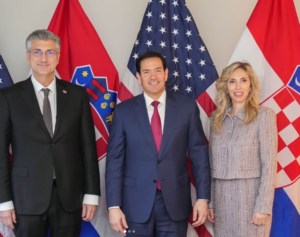
Economic ties are one of the clearest indicators of how strong our relationship has become. In the last three years, trade between the United States and Croatia has grown steadily and is now very well balanced. That reflects a relationship that is not only expanding, but also mutually beneficial. Energy is the central pillar of that cooperation. Croatia’s Krk Island has become a key entry point to Europe for U.S. liquefied natural gas (LNG). That’s because nearly a decade ago, Croatia made the strategic decision to invest in this capacity, and today it is central to regional energy security and helping Europe meet its pledge to transition from Russian gas. Building on that strategic vision, I’m working with Croatia and regional partners to enhance energy security through a series of projects under a new initiative, the “Trump Peace Pipelines.” This is a framework we are using to focus U.S. efforts on strategically important energy deals and projects that not only build our economies but also strengthen regional stability. President Trump is the peace president. Both energy and infrastructure are among our most powerful tools to build peace, including in ways that will ultimately help Ukraine and stabilize the region Finalizing the Southern Interconnection project is part of that vision — it will further integrate regional markets and extend those benefits into Bosnia and Herzegovina. On every occasion, the United States has proven its reliability as a provider of energy resources, infrastructure, and technology. The United States is the global leader in technology and innovation, and Croatia has strong fundamentals for investment: a highly educated workforce, excellent English proficiency, a nd strong technical talent. Most importantly, it has a business environment that is increasingly attractive to U.S. investors. The technology sector is especially promising, as Croatia continues to build its reputation in software development and innovation. The next phase of growth will depend on future-focused investments. Artificial intelligence and emerging technologies will reshape the global economy, and demand for infrastructure and abundant electricity is rising rapidly. I tell my Croatian friends this is the moment to think ahead and invest in the energy infrastructure and digital capacity, like data centers, to lead in the next wave of innovation. As part of that, Croatia is wisely looking at adding nuclear power to its energy mix. We already have a successful foundation of partnership in civilian nuclear energy going back to 1983. The Krško Nuclear Power Plant was built in partnership with the U.S. company Westinghouse and is based on American technology. The plant has powered Croatian homes and companies successfully for decades. Looking ahead, there is strong potential for cooperation with U.S. companies on both conventional and small modular reactors (SMRs) that deliver affordable clean electricity and support long-term economic growth. Croatia had a record 21.8 million tourist arrivals in 2025. American tourists are among the most important markets outside Europe, with over 1.1 million overnight stays from the US in 2024.
4. What is it that Americans know most about us and how do they recognize us? What do you suggest your friends who are planning to visit Croatia to visit and try in terms of gastronomy? What have you liked the most so far?
Many Americans first associate Croatia with its stunning Adriatic coastline, Dubrovnik and Split, but that is only the starting point. What leaves a lasting impression is the diversity of the country and its traditions. My husband and I love Zagreb for its lively cultural scene, world class culinary options, hiking, and museums, but we also enjoy the coast and love exploring everything Croatia has to offer. We are seeing strong growth in American tourists choosing Croatia. I see great opportunities for American businesses to help develop premium tourism to the lasting benefit of both our countries. One promising area that is near and dear to me is golf. Croatia’s stunning landscapes, favorable climate, and rich cultural heritage make it an ideal destination for golf enthusiasts. The United States has demonstrated how investment in world-class courses and resorts can drive economic growth and global sports leadership. In Croatia, I’ve found that few people know how golf development has changed in the last decade. The way courses are built today helps preserve parklike landscapes, green space, and animal habitats, so courses contribute both ecologically and economically. Golf also extends the tourism season and can help draw high-value tourists off the coast and bring investment to new areas. Countries that have invested in world-class golf resorts as part of their tourism strategies have seen outstanding returns . U.S. investors are ready to support Croatia’s goals of developing higher value, sustainable tourism. American investors and partners have proven expertise in developing, marketing, and implementing high-end tourism projects. I hope to unlock opportunities to elevate Croatia’s tourism and deepen economic ties between our countries.

5. The United States is co-hosting the 2026 FIFA World Cup – North America, along with the Canada and Mexico, which will take place from June 11 to July 19, 2026. How did the U.S. prepare and what can we expect? What were the biggest challenges in organizing the tournament?
We are incredibly proud to welcome the world to the United States during such a special year, as we celebrate our 250th anniversary. We know how to host, and we’re ready to deliver an unforgettable World Cup experience. We are thrilled that Croatia will be participating and look forward to sharing our country with players, fans, and visitors from around the globe. The scale of this World Cup is unprecedented. Matches will take place across 16 cities in the U.S., Canada, and Mexico with 11 being in the United States. Our nation will host 78 matches (out of 104) within 39 days, host approximately 50 team base camps, and welcome five to seven million international visitors. It represents a once-in-a lifetime opportunity to showcase the beauty and greatness of America, and we are excited to welcome soccer fans from around the globe. I am confident that both teams and fans will have a wonderful experience and enjoy the warmth of American hospitality wherever they go. Sports diplomacy is a passion of mine. Sports have a unique power to bring people together, and events like the World Cup are a perfect example of sports diplomacy in action.

6. You have been very busy sinceyour arrival in Zagreb and it seems everyone wants to see you and get to know you. What would you highlight from the plans that the embassy is working on and some of the programs that are important for the relations between the two countries and the two nations in the coming period?
First and foremost, I was focused on delivering major wins for the U.S.-Croatia relationship at the Three Seas Initiative Summit in Dubrovnik. We announced key agreements and investments at the summit that would build the foundation for accelerating bilateral investment and cooperation. I look forward to advancing those new investments in energy and digital infrastructure and shepherding the double taxation treaty to completion. I am laser focused on bringing tangible outcomes to the relationship. President Trump values action and so do I. Beyond Three Seas, this year I am excited to celebrate the 250th anniversary of America’s independence – our Freedom 250. This is a chance to showcase American excellence and lift up the incredible people-to-people ties we’ve built with Croatia. I plan to celebrate America’s 250 birthday with our Croatian friends through art, sports, and culture and showcase the civilizational values that unite us as free nations.