One of our key priorities in the following months will be to explain how European policies and the European budget improve the everyday lives of citizens in Croatia.
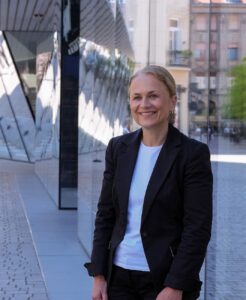
Many of the largest infrastructure, environmental, education, healthcare and development projects completed in Croatia over the past decade have been supported by European funding. Citizens can see the results in their own towns and cities, for Diplomacy&Commerce says Zrinka Ujević, Head of the European Commission Representation in Croatia. For our magazine, we discussed, among other things, the plans of the Commission Representation, the importance of the new Union budget and the role of Croatia in Europe today.
- What are the key priorities of the Representation of the European Commission in Croatia in the coming period and how do you plan to bring European topics closer to the citizens?
We want citizens to see Europe not as something remote and Brussels-bound, but as opportunities: better infrastructure, stronger healthcare, more opportunities for young people, support for businesses, cleaner energy and stronger local communities. As discussions continue on the future EU budget, it is particularly important to demonstrate what European investment means for every generation and every region of Croatia. We will continue engaging directly with citizens through local events, schools, universities, media partnerships, digital channels and influencers. Our objective is to connect European priorities with local realities and to ensure that citizens can clearly see the impact of European policies in their own communities. This comes at a time when support for the European project remains very strong. According to the latest Eurobarometer published by the European Commission in May 2026, nearly three quarters of Europeans believe their country benefits from EU membership.
- To what extent has Croatia successfully used European funds so far, and where do you see the greatest scope for better withdrawal of money from the European Union budget?
The easiest answer is this: look around. Many of the largest infrastructure, environmental, education, healthcare and development projects completed in Croatia over the past decade have been supported by European funding. Citizens can see the results in their own towns and cities. Croatia remains one of the largest beneficiaries of EU investment relative to its size. Through Cohesion Policy alone, Croatia has access to around €9 billion for the 2021–2027 period, supporting everything from transport and water infrastructure to innovation, digitalisation and regional development. But the next phase is about more than absorption rates. The question is no longer only how much money we spend, but how effectively we use it to prepare for the future. Europe is increasingly investing in innovation, artificial intelligence, advanced technologies, research, clean industries and new skills. The future European budget will be judged by one simple measure: whether it helps create better jobs, stronger businesses and greater opportunities for the next generation.
- How important are the topics of the Mediterranean, energy security, migration and climate challenges today for Croatia itself?
For Croatia, these are not abstract topics. They are everyday realities. When a heatwave hits the coast, when drought affects agriculture, when forests burn or when communities face flooding, climate change becomes very tangible. The Mediterranean is one of the regions most exposed to climate risks, and Croatia is already experiencing these impacts. The same applies to energy security. The last few years reminded all Europeans how important secure and affordable energy is for households, businesses and entire economies. Croatia’s position at the crossroads of the Mediterranean and Central Europe gives it an increasingly important role in strengthening Europe’s energy resilience. Migration is another challenge that requires European solutions. Croatia protects one of the longest EU’s external border while contributing to a common European approach that combines security, responsibility and solidarity. Citizens across Europe understand all of these challenges. According to the latest Eurobarometer, support for stronger European cooperation on security and defence has reached a record 81% across the EU, while almost three quarters of Europeans view the EU as a pillar of stability.
- Where do you see Croatia’s greatest potential in cooperation with the rest of Europe — in energy, transport, tourism, security or regional integration?
Croatia’s strength is its position in Europe. It is a Mediterranean country, but at the same time also a Central European country as well as South European country, a member of the euro area and Schengen, and a country with deep knowledge of many European regions. That creates opportunities in energy, transport, logistics and tourism, but also in newer sectors such as digital innovation, clean technologies and research. Europe is increasingly focused on competitiveness, resilience and strategic autonomy, and Croatia has every opportunity to position itself as a contributor.
- How important is it for Croatia within the EU to act as a bridge between the Mediterranean, the Western Balkans and Central Europe?
Croatia understands the Mediterranean because it is part of it. It also understands Central Europe. And it understands the Western Balkans because it shares history, geography and experience with the region. At a time when Europe faces growing geopolitical uncertainty, countries that can connect regions, facilitate dialogue and promote stability become particularly important. Croatia is uniquely placed to play that role. This is especially relevant as the European Union advances enlargement. Enlargement remains one of the EU’s most powerful geopolitical tools, strengthening stability, prosperity and security across the continent. Croatia’s own experience demonstrates the transformative power of European integration for citizens, businesses and institutions.
- Do the citizens of Croatia increasingly recognize the European Union today through concrete projects and benefits in everyday life, and less as a distant administration from Brussels?
I believe they do, and all of the data available supports that conclusion. For many years, Europe was often perceived through institutions and regulations. Today, citizens are far more likely to associate Europe with something they can see and experience directly: a renovated school, a modern railway, cleaner drinking water, an Erasmus exchange, support for a local entrepreneur or better digital services. Or simply – with many opportunities. That shift matters. The European Union is strongest when citizens recognise that European policies produce tangible results in their daily lives. The latest Eurobarometer shows that 79% of Croatians believe EU membership benefits Croatia, above the EU average of 72%. These are among the highest levels of support recorded since Croatia joined the Union in 2013. That is ultimately the story of Europe: countries achieving more together than they could achieve on their own. And nowhere is that more visible than in the everyday lives of Croatian citizens.