Remember that style and fashion are two separate concepts – never follow trends blindly, but rather adapt them to yourself.
A true fashion and style enthusiast, an expert who handles facts and presents them in a way that leaves even the greatest sceptics of the fashion world impressed. A doctor – both by education and by expertise –when it comes to fashion, style, film, and art. In an interview for Diplomacy&Commerce, Nenad Korkut talks about the evolution of style in the world and how it has influenced his own development and transformation, where fashion and the fashion industry are headed, and what kind of impact film and art have on us through the images and stories they present.
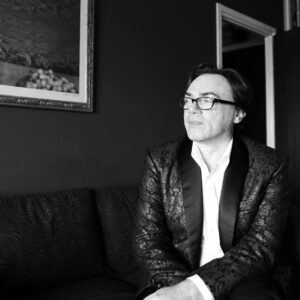
- In Croatia and across the region, you are known as a great expert and a true enthusiast when it comes to fashion and trends. Where did you learn about fashion, taste, and style? Is it something that can be learned, or must you be born with it?
My love for fashion appeared very early in childhood. I can’t say it’s a rule that parents or one’s surroundings necessarily influence that, but in my case, they certainly did. My parents were aesthetically aware—they paid attention to how they dressed and enjoyed dressing me nicely as a child. From an early age, they took me to the theatre and art exhibitions, and I believe that also helped shape my aesthetic standards. During my university years, my passion for fashion grew, and I began following events on the global fashion scene more closely. I studied medicine, but whenever I had the time, I would read fashion literature – it was a way to rest from studying those thick medical books.
There are people who are simply born with style and don’t need to learn about it, regardless of the environment in which they grew up. I know many people who didn’t come from privileged backgrounds, and yet developed a strong sense of fashion. Likewise, I know people raised in highly stimulating aesthetic environments who have no sense of style and show no interest in it. Of course, that has nothing to do with money. Still, some things can be learned. Being born with style isn’t the most important thing in life—just as some people are born without a musical ear and live perfectly normal lives. I don’t see why everyone should have style; I think it’s far more important whether we possess other, more essential human qualities. Fashion should be an upgrade. Unfortunately, people often set the wrong priorities, where bit matters more to them how they look on the outside than how they grow from within.
- What does fashion mean to you? How would you describe fashion and everything it entails today? How much is fashion related to trends? And what, in your opinion, is style, and how should it relate to fashion?
Ever since I began following fashion – and I have been writing about it in the media for 30 years – I have always been fascinated by the phenomenology of fashion, the social conditions that drive change, and the fashion evolution. I have always been more interested in analysing than in criticizing, in asking why fashion changes occur and under what circumstances, rather than what will be worn next season. I am fascinated by the talent of people in this field – designers and photographers alike – and by their development and creative maturation. I find it meaningless to answer banal questions like whether green or yellow, stripes or polka dots, will be in fashion this season. Anyone can flip through a fashion magazine and get that information. For me, fashion has always been a way to briefly escape the not so pleasant realities that often surround me in everyday work. My answer regarding trends is the same every season: individuality will always be in fashion. Today’s fashion is very democratic, allowing you to take exactly what suits you. Remember, style and fashion are two separate concepts. Being dressed according to the latest trends does not mean you have style. As Coco Chanel said: “Fashion fades, only style remains the same.”
- We are used to hearing your commentary every time we watch the Oscars on HRT. How does a walk on the red carpet influence global trends? How do designers choose their muses or models for such events, and what guides their decisions? How has this evolved historically?
The Oscars have always fascinated me because they combine my two great passions: film and fashion. Although, as a cinephile, I am more interested in films showcased at Cannes, Venice, and Berlin, the Oscars have always captivated me as a major media spectacle. Over the past 20 years, we have witnessed significant changes in the ceremony itself. The red carpet has become as important as the awards ceremony, making the Oscars (alongside the Met Gala) the most significant fashion – not just film – event in the entertainment industry. Fashion designers and major fashion houses have become aware that having their brand name spoken on the Oscar red carpet has far more commercial impact than traditional advertising campaigns. In the past, actresses wore dresses created by Hollywood costume designers; today, they appear as brand ambassadors for fashion houses with whom they often have contracts. The designs we see on the red carpet rarely influence everyday fashion trends because they are couture pieces. These dresses are made specifically for the occasion, they are extremely expensive, and not intended for the general public. Fashion houses do not make their living from couture, but they understand that such high-profile exposure generates enormous profits through the sale of accessories, shoes, bags, perfumes – essentially everything that constitutes their business.
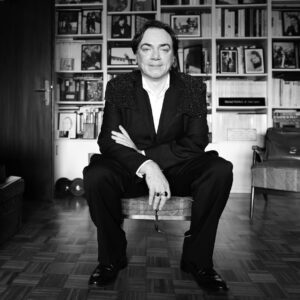
- The psychology of dressing is complex and it influences culture, sexuality, etc. How would you describe the impact of designers today compared to the past? How much does ready-to-wear and mass production, which were not as widespread before, influence their work – or vice versa?
The differences are enormous. In the past, fashion catered to a very narrow circle of privileged clients. It wasn’t until 1966, when Yves Saint Laurent opened his legendary Rive Gauche boutique, that prêt-à-porter was born. Until then, designer clothing could only be custom-ordered, and the opening of a store where one could buy designer ideas in their size was a true fashion revolution. This significantly democratized fashion, making it accessible to a broader audience. Another major shift in modern fashion has been the appearance of brands specializing in so-called fast fashion. Famous fashion houses present their collections six months in advance, but their ideas quickly appear in cheaper versions in these stores. Given the rapid turnover of new items that such brands release, it’s no surprise that the fashion industry is now one of the planet’s largest polluters. Fast fashion is not made to last, and consumerism has long overshadowed genuine creativity.
- In the past, fashion and designer clothes were reserved for the wealthy. Unique dresses, suits, and special wardrobe pieces were created. To what extent is fashion perceived as art?
For me, fashion is certainly art, and I do not necessarily view it only as wearable. If someone sees clothing merely as something to cover their body or keep them warm, then they certainly do not perceive it as art. People have different interests in life, and thus different perspectives on fashion. For some, it is just clothing; for others, it is much more. Of course, not everything in fashion is worthy of artistic valuation, but given that major museums around the world have long hosted fashion exhibitions and tributes to great designers, it is clear that once it entered a museum space, fashion has been recognized as art.
- Recently, the legendary Giorgio Armani passed away at the age of 91. How much does his passing mark the end of an era in style and elegance, even though he built an empire beyond the runway (furniture, hotels, etc.)?
Armani was certainly a unique figure in the world of fashion, for several reasons. One is that he is one of the few designers in history who gained fame dressing men – a particularly difficult feat, given that fashion is primarily geared toward women. Another is that he did not grow up fascinated by the fashion world from a young age, unlike most of his colleagues. He entered the fashion world almost by chance. In the biographies of almost all major designer stars, their passion for clothing and style emerged very early, whereas Armani achieved his fashion recognition only after turning 40. His childhood was not idyllic like that of his generational peers Valentino, Karl Lagerfeld, or Yves Saint Laurent, who came from well-off, if not wealthy, families.
His vision of a modern man was truly revolutionary, and very risky for its time. It is difficult to make significant innovations in menswear, given that there is limited room for experimentation within the classic suit. Yet, what makes Giorgio Armani’s name important in the history of men’s clothing today can be compared to what Coco Chanel did for women in the early 20th century. His clothing freed men from traditionally rigid cuts and conventional lines. Just as Coco discarded corsets and allowed women to breathe, Armani softened the male silhouette, making it incredibly relaxed without stripping away its masculine attributes. He made his fashion vision not only aesthetically inspiring but also comfortable. Men quickly embraced this new fashion worldview, but to everyone’s surprise, so did the women. His rise coincided with the “yuppie” revolution, when women, striving to prove themselves equal to men in the workplace, sought to be taken seriously. Armani saw this as the perfect opportunity for his breakthrough. Women were, of course, captivated by the simplicity and elegance of his lines, and soon his fashion fame was equally recognized for collections for both sexes. His minimalist approach was quickly adopted by Hollywood elites.
He will also be remembered for the breadth of his business empire. He launched numerous subsidiary fashion lines, furniture and home décor collections, and opened hotels and restaurants designed according to his aesthetic vision. He was a man who, starting with fashion under his own name, created a complete lifestyle concept. Without a doubt, his passing marks the end of an era in fashion.